Fall detection is often discussed as a device problem. A wearable detects motion, a sensor notices that someone is down, or a room-based system triggers an alert. For senior living, nursing homes, and healthcare technology teams, that is only the first layer of the challenge.
A fall detection device can create a signal. A safety platform has to turn that signal into a reliable decision, a clear staff workflow, and useful data for preventing the next incident. This platform-level approach is already visible in senior living safety products such as Rythmos, which connect resident monitoring, real-time awareness, alerts, and operational workflows into a broader safety system.
That distinction matters for any company building healthcare IoT, resident monitoring, remote care, or senior living technology. The market does not only need more sensors. It needs connected systems that combine detection, location, verification, escalation, documentation, analytics, and integration with care operations.
This is where software architecture becomes as important as hardware accuracy.
Why sensor-first fall detection often breaks down
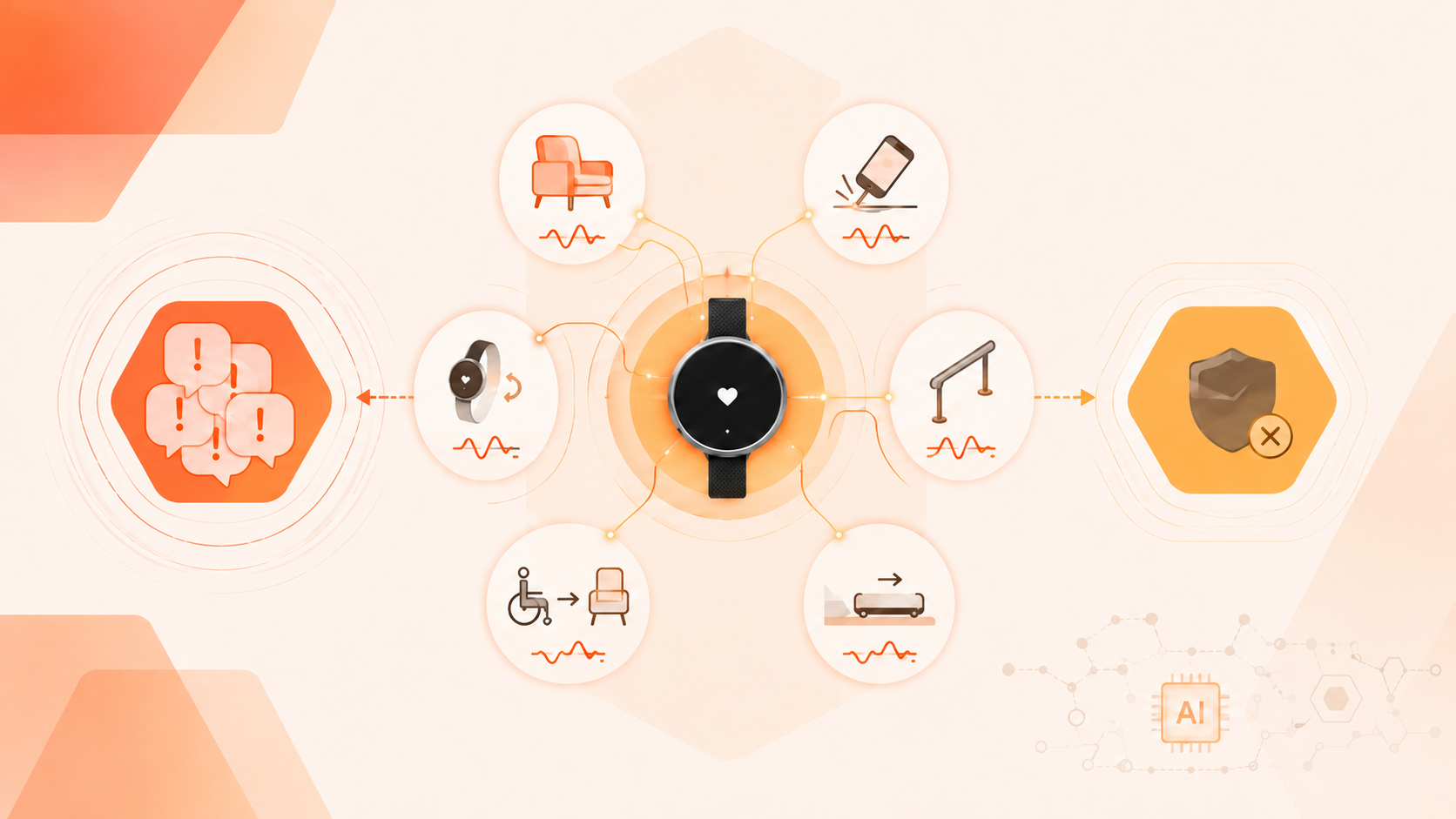
Sensor-first fall detection breaks down because real resident movement is messy. Falls do not always look like sharp acceleration spikes, and normal activity can sometimes look like a fall.
A resident may sit down heavily, drop a wearable, remove a device, lean against furniture, slide slowly from a chair, or move abruptly during a transfer. A simple threshold-based model may struggle to separate these situations without additional context.
This creates a common product risk: the system either becomes too sensitive and creates too many false alerts, or too strict and misses atypical events.
For healthcare technology teams, this is not just a data science issue. It is a workflow and trust issue. If staff receive too many low-value alerts, adoption drops. If the system misses important events, confidence drops. In both cases, the product fails operationally, even if the underlying sensor works.
A practical example of this shift can be seen in platforms such as Rythmos by Intrex, where fall detection is treated as part of a broader resident safety workflow rather than as a standalone sensor feature.
AI can help, but only if the data foundation is strong
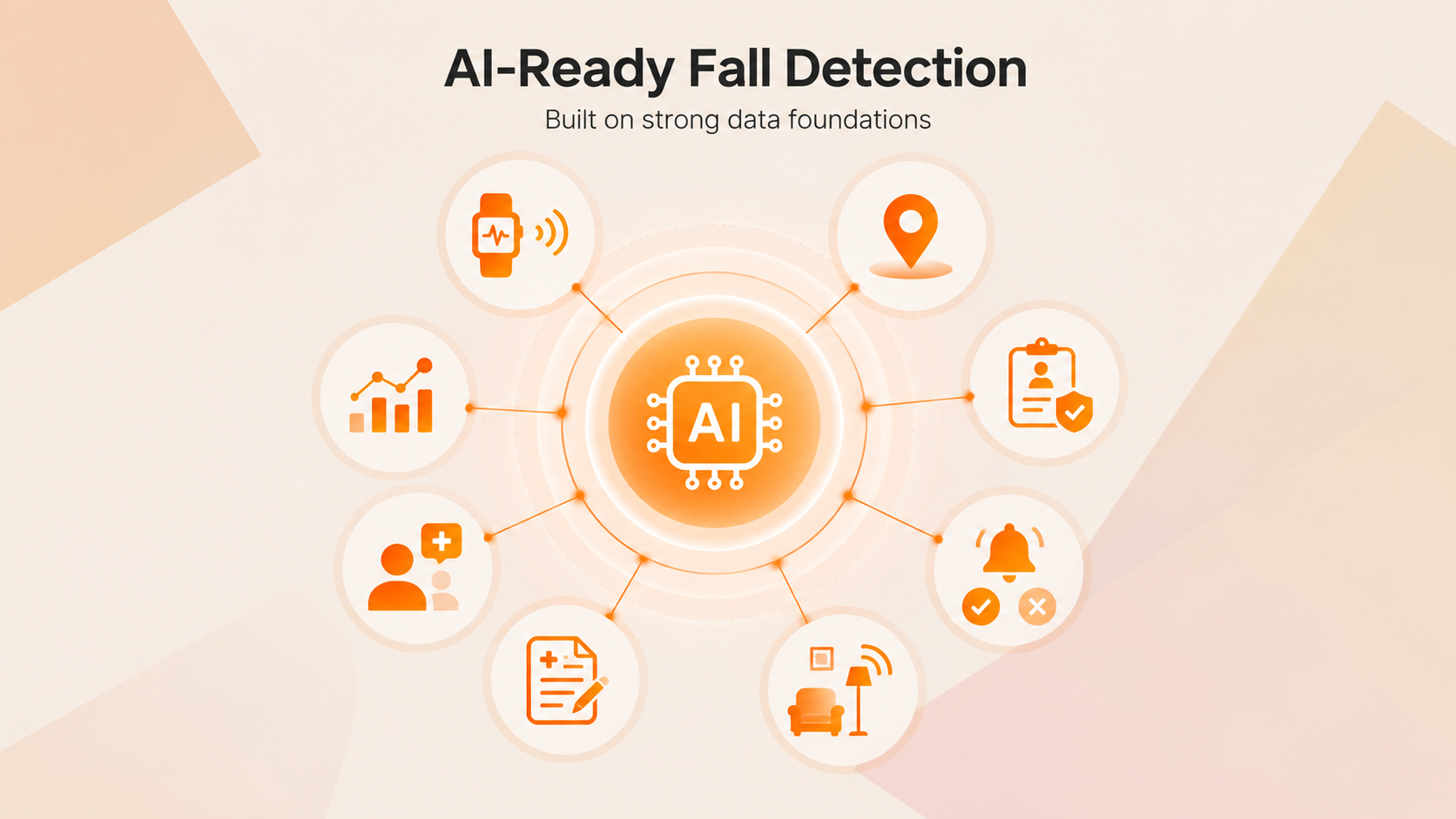
AI can improve fall detection by learning patterns across motion, location, behavior, and event history. But AI models are only useful when the platform collects clean, contextual, and operationally meaningful data.
An AI model trained only on isolated motion signals may improve classification, but it still lacks important context. It may not know where the resident was, whether the event happened near a bed or bathroom, whether the resident has a history of falls, whether the alert was confirmed by staff, or whether similar events happened before.
An AI-ready fall detection platform needs data from several layers:
- wearable or sensor signals
- real-time location data
- resident profile and risk context
- staff response events
- alert confirmations and dismissals
- environmental or room-level context
- post-fall documentation
- repeated incident patterns
This does not mean every platform needs complex AI from day one. It means the software should be designed so that future AI features can use structured, reliable, and well-labeled data.
What an AI-ready fall detection platform should include
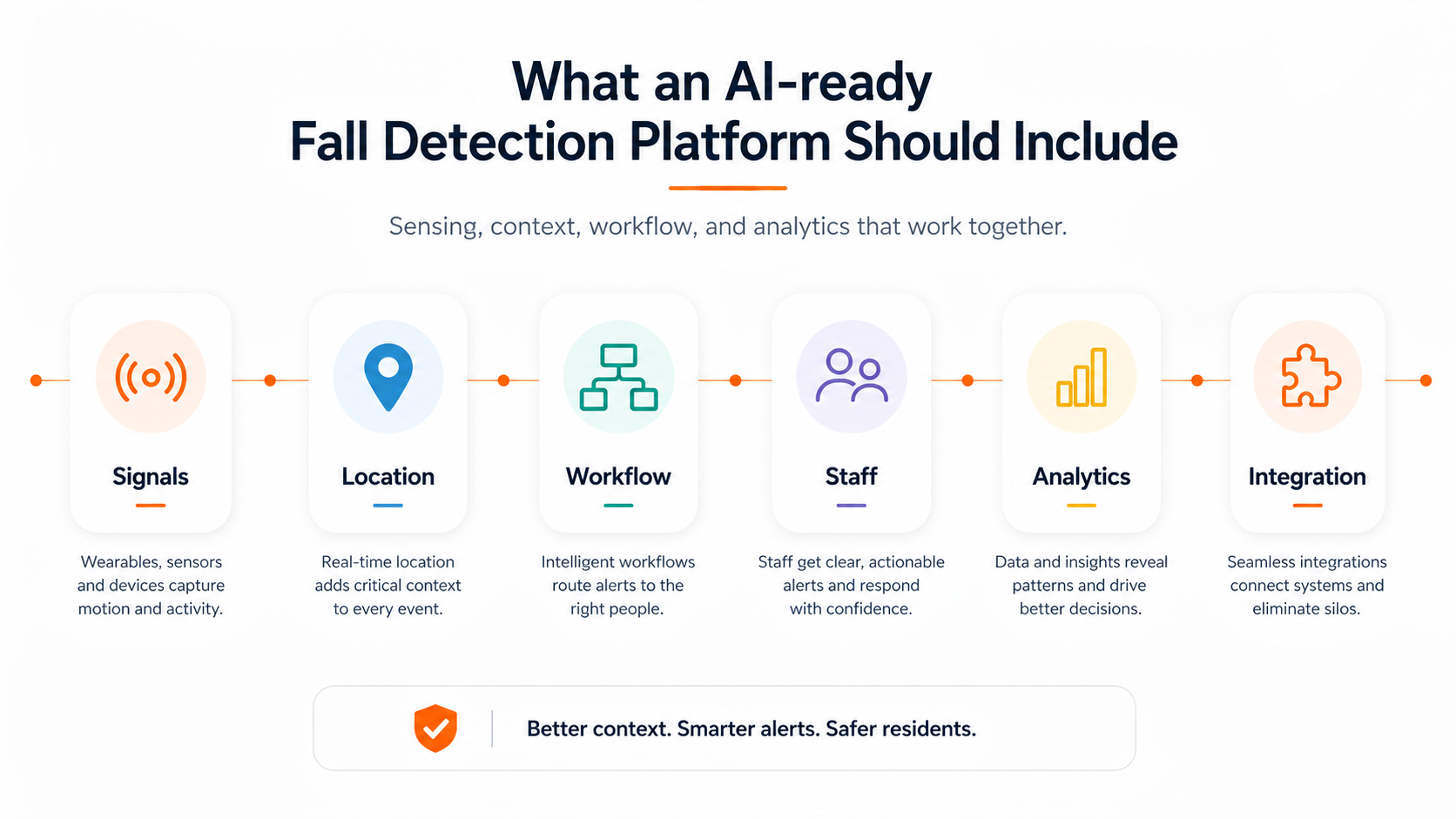
An AI-ready fall detection platform integrates sensing, context, workflow, and analytics into a single system. The goal is not to generate more alerts. The goal is to create better decisions.
Below are the core architecture layers that healthcare and senior care technology teams should consider.
1. Multi-signal data ingestion
A strong platform should not rely on a single signal, since resident safety depends on context. Multi-signal ingestion allows the system to combine data from wearables, room sensors, RTLS tags, nurse-call events, access control systems, mobile apps, or third-party devices.
The purpose is not to collect data for its own sake. The purpose is to reduce blind spots.
For example, motion data may suggest a possible fall. Location data can show where it happened. Staff response data can confirm whether the event was real. Historical data can show whether this resident has repeated incidents in the same area.
2. Event classification and confidence scoring
Every alert should not be treated equally. A useful platform should classify events and assign confidence levels based on available data.
A high-confidence fall alert may require immediate escalation. A lower-confidence event may require verification. A repeated low-confidence pattern may indicate device misuse, workflow friction, or a resident-specific risk that needs review.
This approach helps teams avoid a binary system where everything is either “fall” or “no fall.” Real care environments need more nuance.
3. Real-time location awareness
Location is critical because staff cannot respond effectively if they do not know where the resident is. In senior living and healthcare environments, a few minutes of search time can matter.
Real-time location awareness also supports prevention. If repeated incidents happen near bathrooms, beds, corridors, exits, or dining areas, the facility can investigate environmental, staffing, or routine-based causes.
For product teams, RTLS should not be treated as an optional map feature. It can become a core data layer for routing, escalation, analytics, and safety insights.
4. Workflow layer
The workflow layer decides what happens after the platform detects risk. It connects the event to the right staff member, the right location, the right escalation path, and the right documentation flow.
This layer is where many fall detection products either become useful or become noise. If staff have to guess what an alert means, search for the resident, or manually copy information into another system, the platform is not reducing operational pressure.
For an AI-ready product, the workflow layer also creates valuable feedback data. Confirmed alerts, dismissed alerts, response times, and unresolved events become training and improvement signals for future versions of the system.
5. Staff experience layer
The staff interface should be designed for speed, not for showing every piece of available data. During an incident, the screen should make the next action obvious.
A practical interface gives staff the essentials: resident, location, alert type, urgency, acknowledgement status, and the next required step. Everything else should support review, not slow down response.
This is important because healthcare IoT products often fail at the last mile. They collect useful data, but they present it in a way that adds cognitive load. In senior care, a good interface should reduce uncertainty during a shift.
6. Analytics and learning layer
A fall detection platform should learn from what happens after each alert. Confirmed incidents, false alerts, missed events, response patterns, repeated locations, and staff feedback all help the product improve.
This layer turns fall detection from a reactive alarm system into a continuous improvement system. Operators can see where risk repeats. Product teams can see where the model or workflow needs refinement. Future AI features can use cleaner, better-labeled operational data.
7. Integration layer
Fall detection rarely operates alone. A platform may need to connect with nurse-call systems, EMR/EHR tools, resident records, staff communication tools, reporting dashboards, access control, or RTLS infrastructure.
If integration is ignored, the product creates more manual work. If it is planned early, the platform becomes part of the care environment instead of another disconnected system.
For Aionys-style development work, this is one of the most important areas. The value is not only in building an app. The value is in connecting devices, data, workflows, and third-party systems into one usable product.
Staff trust is a product feature
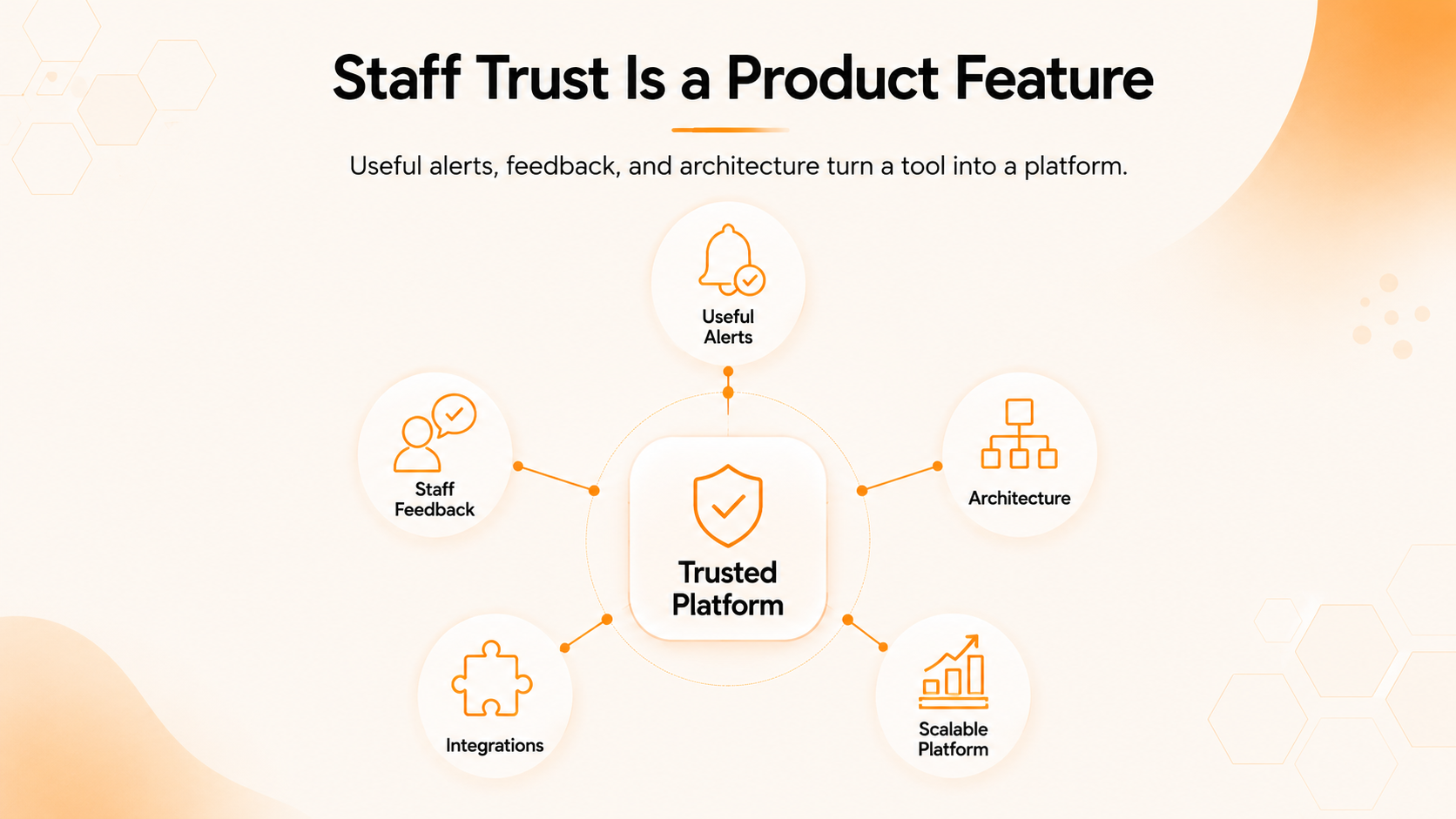
Staff trust should be treated as part of the product, not as a soft adoption issue. If alerts feel random, excessive, or hard to verify, teams will stop treating the system as reliable.
For product teams, this means accuracy metrics are not enough. The platform also has to show whether alerts are useful in daily operations: how often they are confirmed, how quickly they are acknowledged, where they repeat, and where staff dismiss them.
This feedback loop is especially important for AI-enabled systems. It gives the model and the product team real operational data instead of relying only on lab performance or vendor claims.
Why this matters for product development
For healthcare technology companies, fall detection is a good example of a broader product challenge: the hardest part is often not collecting the signal, but turning that signal into a usable system.
A platform has to handle uncertain data, human response, operational pressure, privacy expectations, and integration with existing infrastructure. That is why architecture decisions made early can shape whether the product remains a narrow tool or grows into a scalable safety platform.
When custom development makes sense
Custom development makes sense when the product needs to go beyond a standard device or single-purpose application.
For example, a healthcare or senior care technology company may need a custom platform when it has to combine sensor data, RTLS, AI models, staff workflows, reporting, third-party integrations, and facility-specific rules. These requirements are difficult to solve with a generic product template.
Buying an existing tool may be enough for a narrow use case. Building a platform makes more sense when the company needs control over the data model, user experience, integrations, analytics, and future AI roadmap.
Conclusion: fall detection needs platform thinking
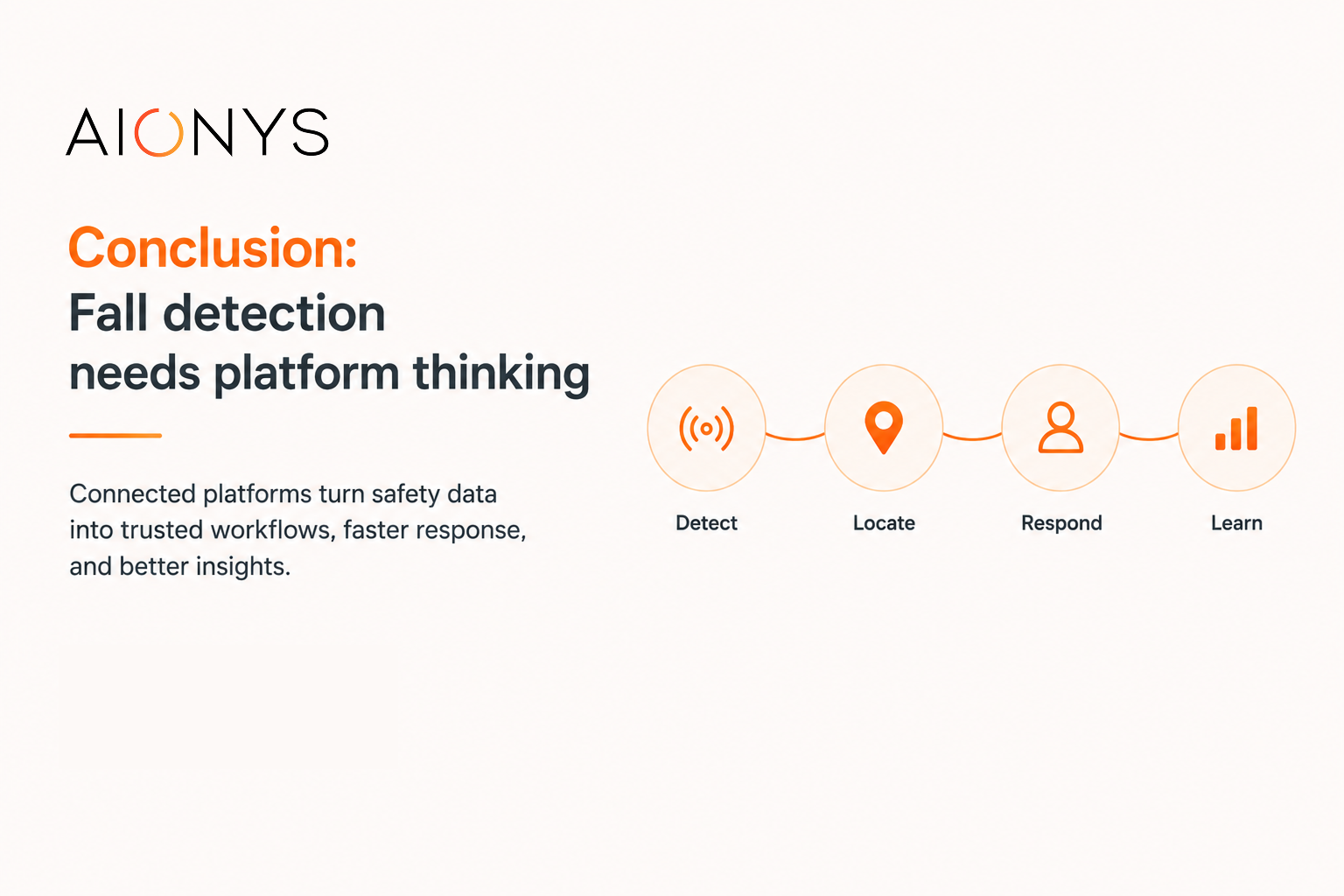
Fall detection technology is moving from isolated devices toward connected platforms. The next generation of products will not be judged only by whether they can detect an event. They will be judged by whether they can turn safety data into trusted workflows, faster response, and better operational insight.
For healthcare technology companies, this creates a clear product opportunity. Teams that build the right software foundation early can move beyond basic alerts and create systems that are easier to trust, easier to integrate, and easier to improve with AI over time.
Aionys helps companies build custom software products where data, workflows, integrations, and long-term scalability matter.
For healthcare IoT and senior care technology teams, that can mean building the backend, dashboards, mobile interfaces, AI-ready data pipelines, integrations, QA processes, and support systems behind a resident safety platform.