


Platform solution with a training portal for a cleaning company
What Is Custom Web Development? Everything You Need to Know

-
Alexey Grebennikov
-
Feb 5, 2026 · 6 min read
What Is Custom Web Development? Everything You Need to Know
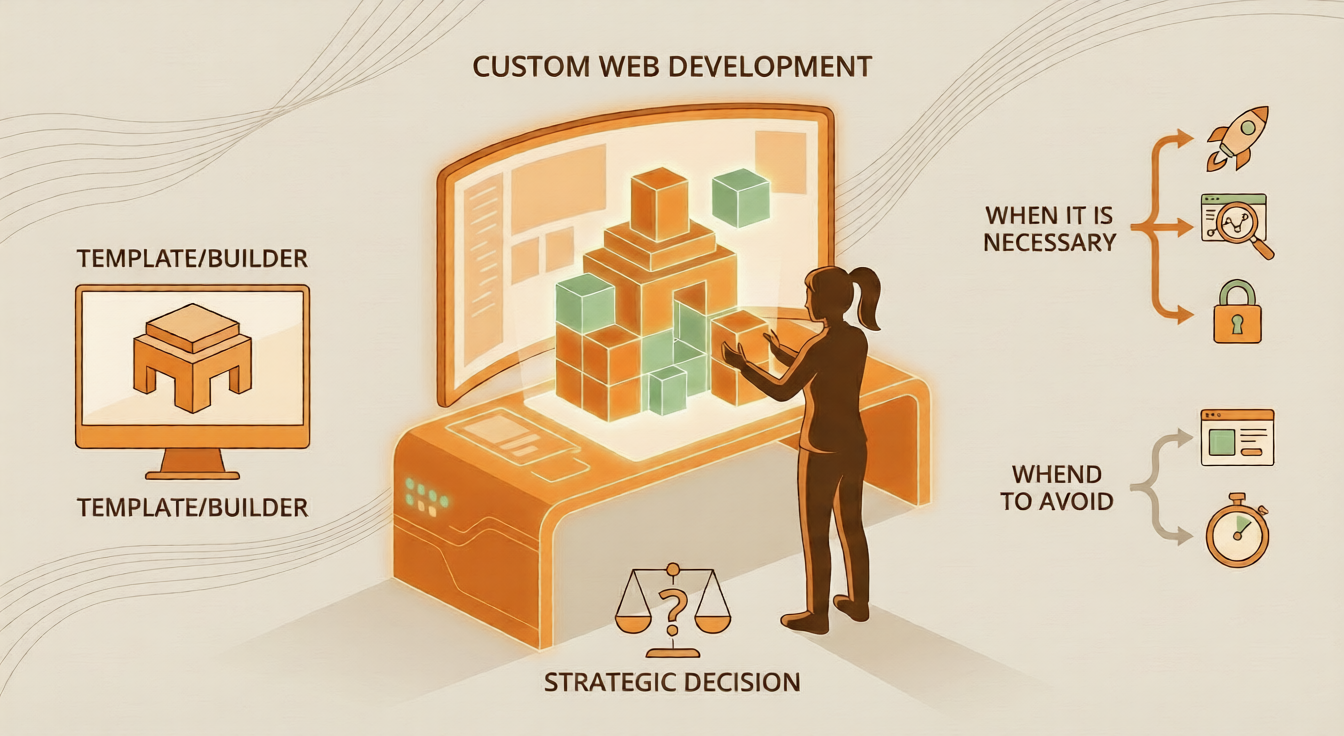
Custom web development is a popular option, but it's not always the right one. We've worked with businesses who were smart to use it, and others who jumped the gun or went in for the wrong reasons. It's important to know what custom web development actually is (and what it isn't) to make sure you're not setting yourself up for disaster.
This article explains how custom web development works, when it makes sense, and how it differs from templates, builders, and standard web development services. The goal is not to convince you that custom is always better. The goal is to help you decide when it is necessary.
Custom web development refers to building a website or web-based system around specific business requirements, rather than adapting the business to fit a pre-built product. That distinction matters.
In a custom web development project, design, engineering, data structure, and integrations are planned together. The website is treated as part of a broader system that supports marketing, sales, operations, and sometimes compliance. A custom web development agency usually starts by understanding constraints. Existing software. Internal workflows. User roles. Security expectations. Performance targets.
Custom web development is not limited to visual uniqueness. It includes how data flows, how permissions are handled, how content is managed, and how the system evolves. A custom web development service focuses on long-term fit, not just initial delivery.
Custom Web Development Versus Templates and Builders
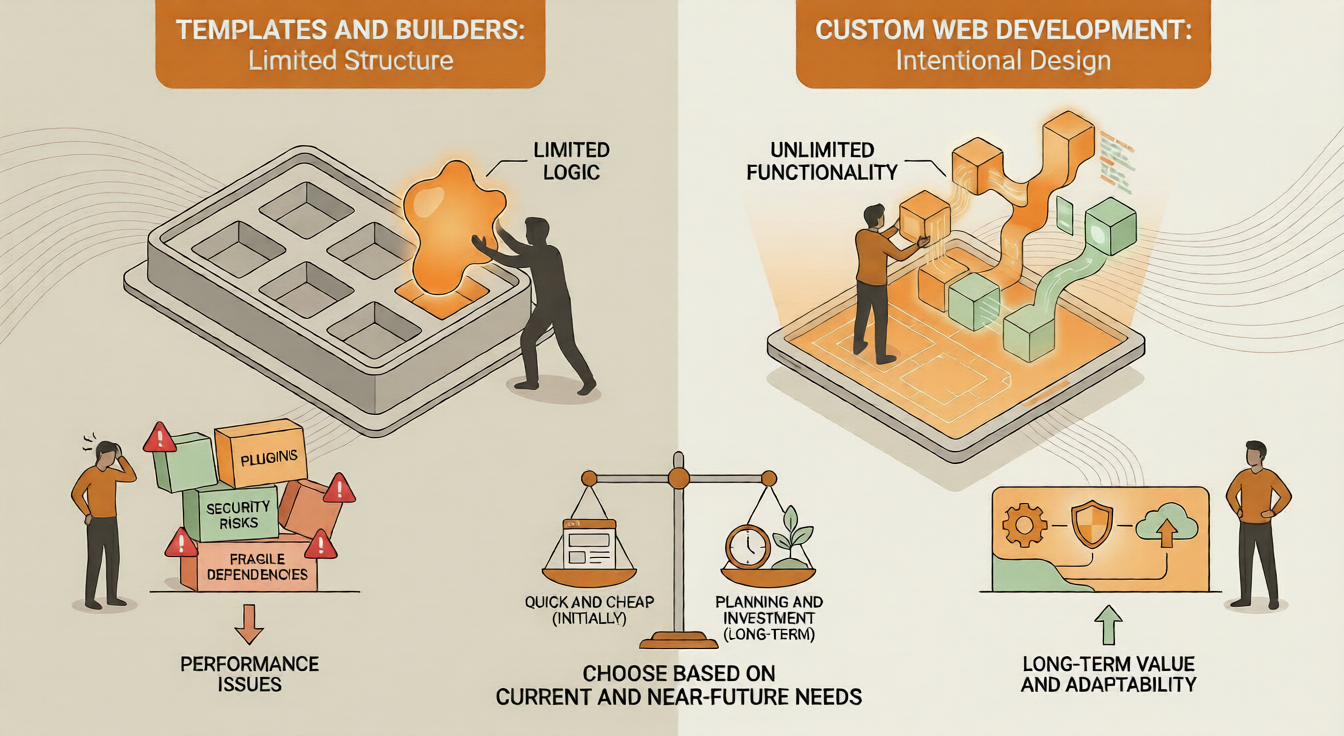
Templates and website builders have changed the entry barrier for publishing a website. For many use cases, they are sufficient. A simple informational site, a local business page, or a basic landing page can often be built faster and cheaper with a template.
The tradeoff appears when requirements grow. Templates impose structure. Builders limit logic. Customization options eventually run out. We have seen companies stack plugins to compensate, only to introduce performance issues, security risks, and fragile dependencies.
Custom web development removes those constraints. Instead of working around limitations, functionality is designed intentionally. That said, custom development requires more planning, more time, and a higher upfront cost. The question is not which option is better in general. The question is which option fits your current and near-future needs.
Why Companies Choose Custom Web Development Services
.png)
Most companies do not start with custom web development. They arrive there after friction builds.
A common scenario involves growth. A website that began as a marketing asset becomes a lead generation engine. Lead routing becomes complex. Integrations with CRM and analytics become necessary. Reporting requirements increase. At this point, generic tools struggle to keep up.
Another trigger is speed. Teams find that simple changes take too long. Deployments are risky. Each update affects unrelated parts of the site. When time to market becomes a competitive factor, these delays matter.
Custom web development services are often chosen when the website becomes operational infrastructure rather than just a presentation layer.
What a Custom Web Development Agency Typically Delivers
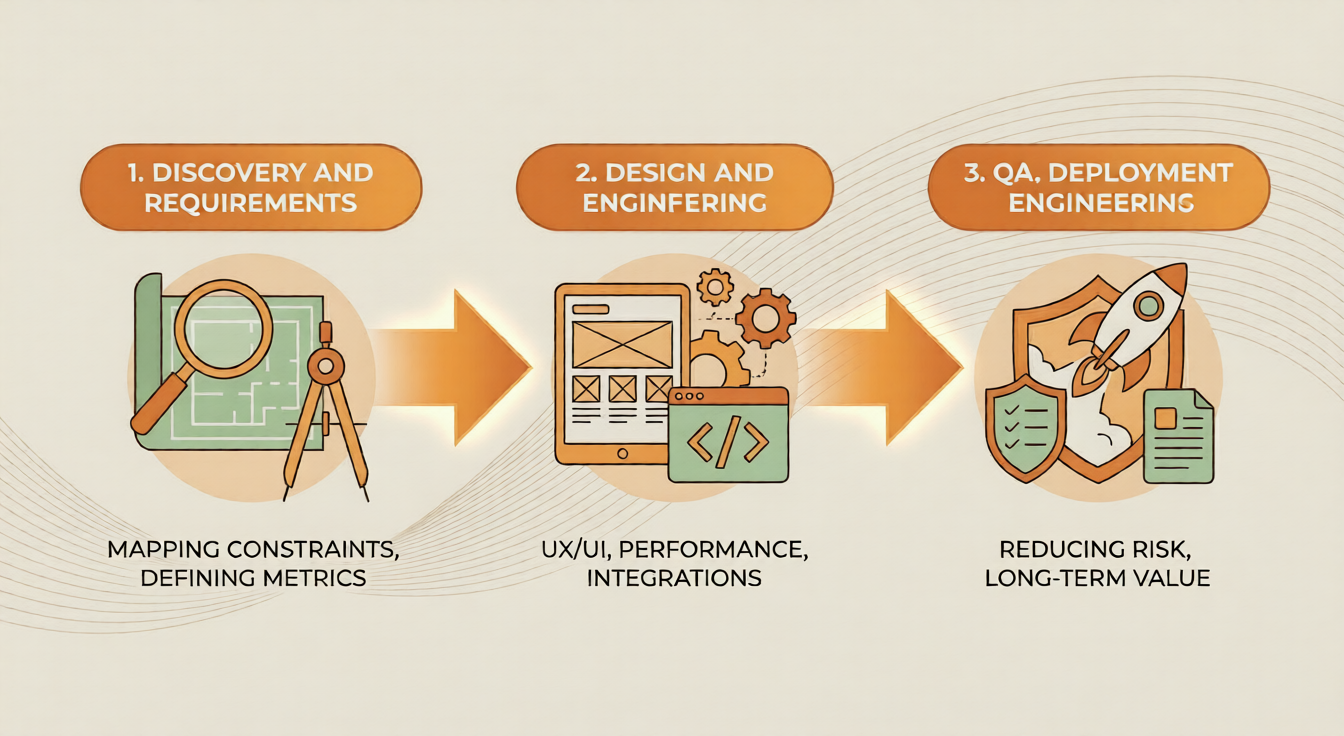
A professional custom web development agency does more than write code. The work usually starts with discovery.
Discovery includes mapping requirements, identifying technical constraints, and defining success metrics. Skipping this phase often leads to scope changes and rework later. We have seen this pattern repeatedly.
From there, design and engineering progress together. UX and UI decisions are informed by user behavior and business goals. Front-end and back-end development are aligned with performance, scalability, and security requirements. Integrations with third-party systems are planned deliberately, not added as afterthoughts.
Quality assurance, deployment processes, and documentation are part of responsible delivery. These elements reduce long-term maintenance costs and operational risk.
Custom Web Development and Web Design Are Not the Same Thing
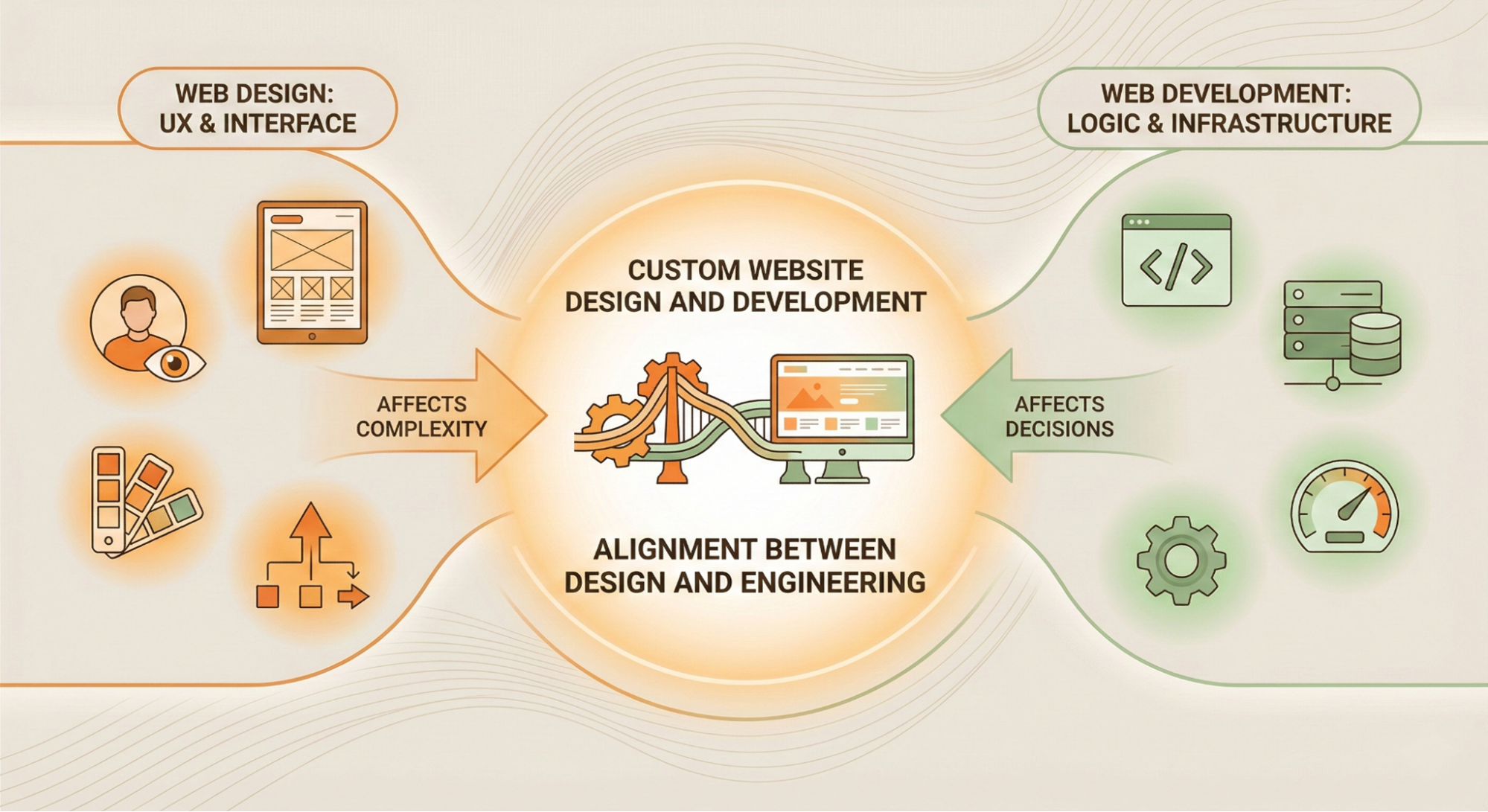
Web design and web development are often used interchangeably. They are not the same.
Web design focuses on user experience, interface layout, accessibility, and visual hierarchy. Web development focuses on how the system works. Front-end logic. Back-end services. APIs. Databases. Performance.
Custom website design and development connect these disciplines. Design choices affect development complexity. Development constraints affect design decisions. Treating them separately often leads to friction.
A web design and web development company that works in silos usually produces suboptimal results. Alignment between design and engineering is critical.
Benefits of Custom Web Development
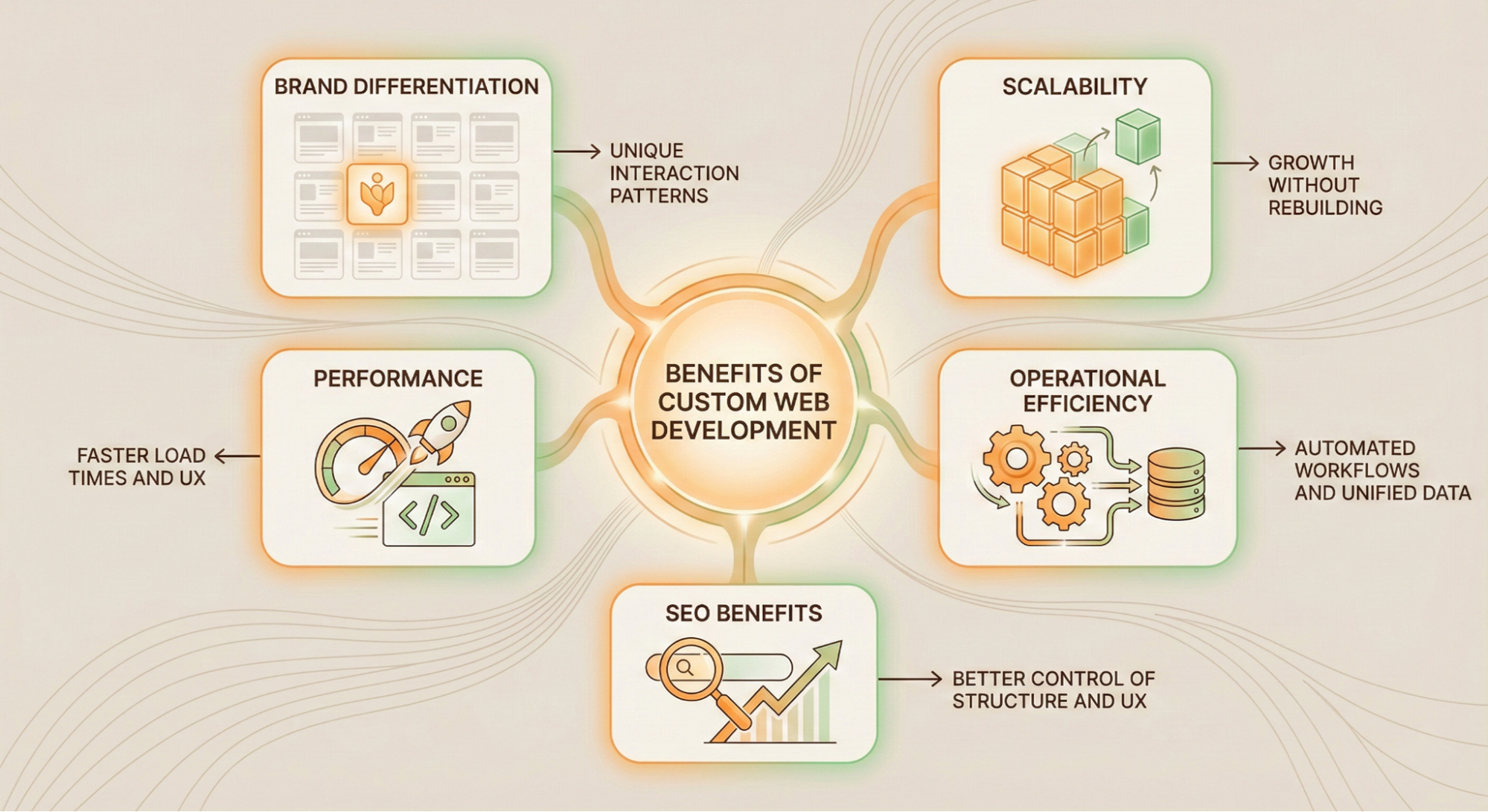
Custom web development offers several advantages when applied appropriately.
Brand differentiation is one. A custom website avoids the visual sameness that comes from widely used templates. More importantly, it allows interaction patterns that match your product and audience.
Scalability is another. Custom systems are designed to grow. New features, new integrations, and higher traffic can be accommodated without rebuilding from scratch.
Performance is often better. Custom builds avoid unnecessary bloat. Code is written for specific use cases. This can improve load times and user experience, which affects conversion and search visibility.
Operational efficiency is also a factor. Custom web development solutions often reduce manual work by automating workflows and consolidating data. We have seen support teams resolve issues faster simply because information was unified.
SEO benefits can follow, not because custom sites are inherently favored, but because performance, structure, and user experience are easier to control.
How to Know If Custom Web Development Is Right for You
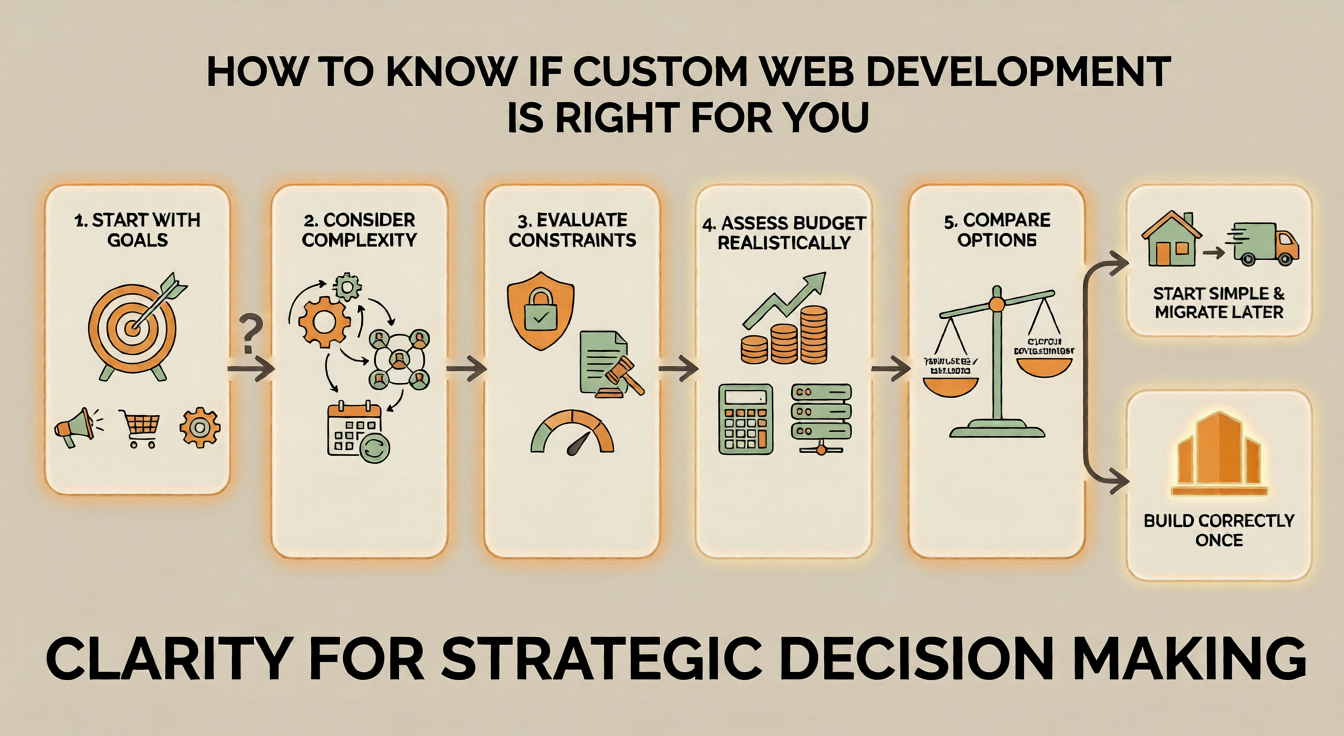
Deciding whether to invest in custom web development requires clarity.
Start with goals. What role does your website play in your business? Is it informational, transactional, or operational? Does revenue depend on it directly?
Consider complexity. How many integrations are required? How many user roles exist? How often does functionality change?
Evaluate constraints. Security requirements. Compliance obligations. Performance expectations.
Assess the budget realistically. Include not only development, but also ongoing support, hosting, and maintenance.
Compare options. Templates. Builders. Custom development. Compare not only features, but also long-term cost and risk.
In some cases, starting with a simpler solution and migrating later makes sense. In others, rebuilding twice costs more than building correctly once.
Custom Web Development Services in Practice at Aionys
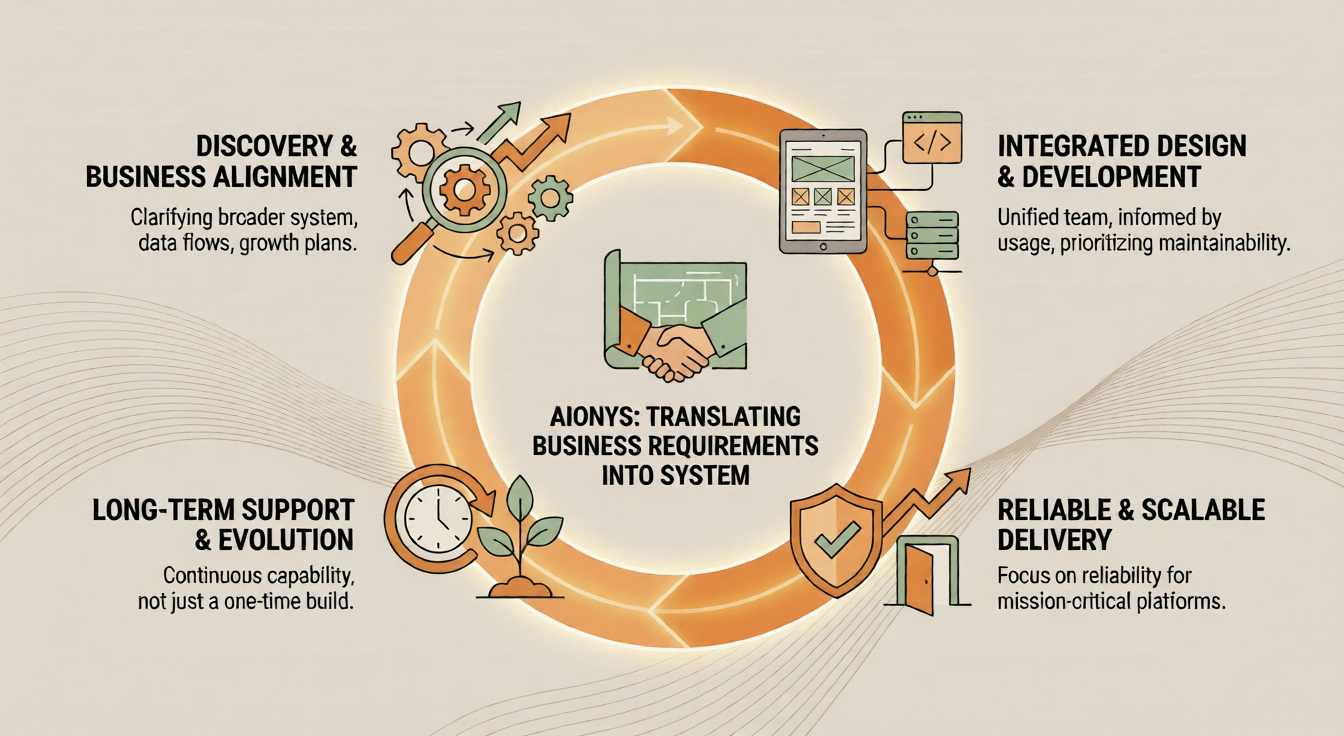
Custom web development services work best when they are treated as a long-term capability, not a one-time build. This is the approach we follow at Aionys.
We typically begin by clarifying how the website fits into the broader business system. That includes understanding existing platforms, data flows, operational constraints, and future growth plans. Discovery is not a formality for us. It is how risk is reduced early, before design or development decisions are locked in.
Our teams work across design, front-end, back-end, and infrastructure with a single delivery model. Design decisions are informed by real usage scenarios. Engineering decisions prioritize maintainability, performance, and security. Integrations are planned deliberately, with clear ownership and documentation.
We often support companies whose websites are no longer just marketing assets. They are lead engines, internal tools, customer portals, or revenue-critical platforms. In these cases, our custom web development services focus on reliability, scalability, and operational clarity rather than visual novelty.
Whether the engagement involves a full custom website design and development project, enterprise web development services, or a targeted rebuild of a high-impact system, our role remains the same. Translate business requirements into systems that are stable, adaptable, and understandable by the teams that operate them.
Final Perspective
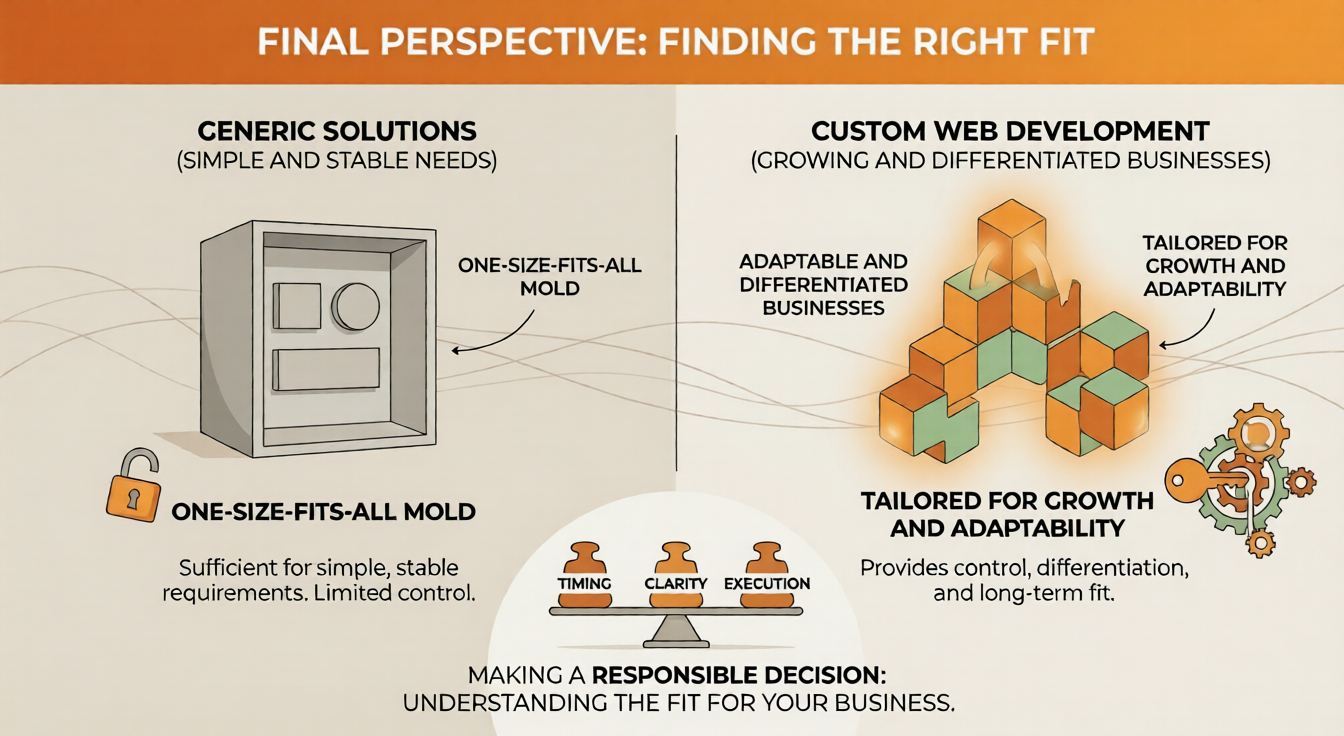
Custom web development is not about building something complex for its own sake. It is about building something that fits.
For simple, stable needs, generic solutions may be sufficient. For growing, changing, or differentiated businesses, custom web development services provide control that templates cannot.
The right choice depends on timing, clarity, and execution. Understanding what custom web development actually involves is the first step toward making that decision responsibly.
In this article
- What Is Custom Web Development? Everything You Need to Know
- Custom Web Development Versus Templates and Builders
- Why Companies Choose Custom Web Development Services
- What a Custom Web Development Agency Typically Delivers
- Custom Web Development and Web Design Are Not the Same Thing
- Benefits of Custom Web Development
- How to Know If Custom Web Development Is Right for You
- Custom Web Development Services in Practice at Aionys
- Final Perspective
Ready to Discuss your project with us?
- In touch 24 hours a day, 7 days a week
- Individual attitude to clients
- Unique solutions for each project
- Flexible adaptation to needs
- Support in Critical situations
 Alexey
Co-Founder & CEO
Alexey
Co-Founder & CEO

 Ivan
Co-Founder & CTO
Ivan
Co-Founder & CTO
-
 alexey.grebennikov@aionys.com
-
10:00AM - 07:00 PM GMT+2
-
ivan.korytin@aionys.com
-
10:00AM - 07:00 PM GMT+2

Check out our new cases!
Let's bring your ideas to life.
-
 The cleaning company domain: Guestable
 -

-
 Intrex domain: HealthCare
Improving Healthcare Product and IoT App Development for senior living communities

Our Contacts
-
Bulgaria01:00 PM

-
Ukraine01:00 PM
-
Poland12:00 PM
-
USA06:00 AM
-
France12:00 PM
-
Albania12:00 PM
-
Georgia02:00 PM
-
Kazakhstan03:00 PM
-
Austria12:00 PM