AI Automation of Email Order Processing for Furniture Manufacturers
We helped a furniture manufacturer scale its order processing operations by turning unstructured dealer emails into clean, validated, and system-ready data.
Client
We helped a furniture manufacturer scale its order processing operations by turning unstructured dealer emails into clean, validated, and system-ready data.
Client
Our client is a B2B furniture manufacturing company operating through a dealer-based order model. The company processes 15–20+ incoming orders per day, with email serving as the primary order intake channel. The company used an ERP system for order execution and accounting, while CRM and Excel were used for operational coordination and interim tracking between teams. As order volumes grew, the existing process began creating operational bottlenecks. Dealer orders arrived without a standardized data format and required manual interpretation before they could be transferred into execution systems.

Orders were received by email in multiple formats, including PDFs, images, scanned documents, and spreadsheets. Since there was no unified structure at the intake stage, every request required manual interpretation before processing.
With 15–20+ daily orders and 15–30 minutes required to process each order manually, the operations team faced increasing pressure. During seasonal peaks, the process reached its capacity limits and caused delays.
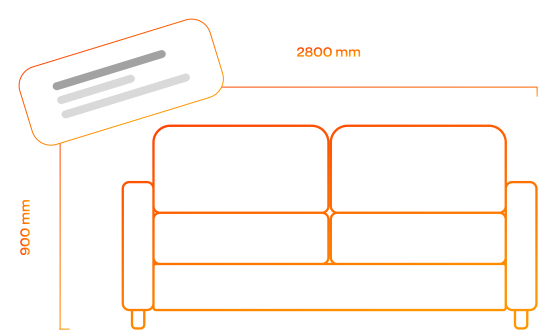
Furniture orders require highly accurate specifications, including dimensions, materials, configurations, quantities, and delivery details. Manual data transfer from email to ERP increased the risk of mistakes, leading to rework, returns, and financial losses.
A shared inbox became a bottleneck in the order processing workflow. During high-load periods, some requests were delayed or required manual prioritization, reducing response speed.
Although ERP served as the system of record for order execution, order-related data was distributed across email and operational coordination tools. This made it difficult to maintain a single real-time view of order status and process bottlenecks.
The client approached Aionys in search of a solution, and we developed an AI-powered system that automatically receives and processes dealer orders, extracts key information from emails and documents, and sends it directly into the client’s ERP, CRM, and production systems.
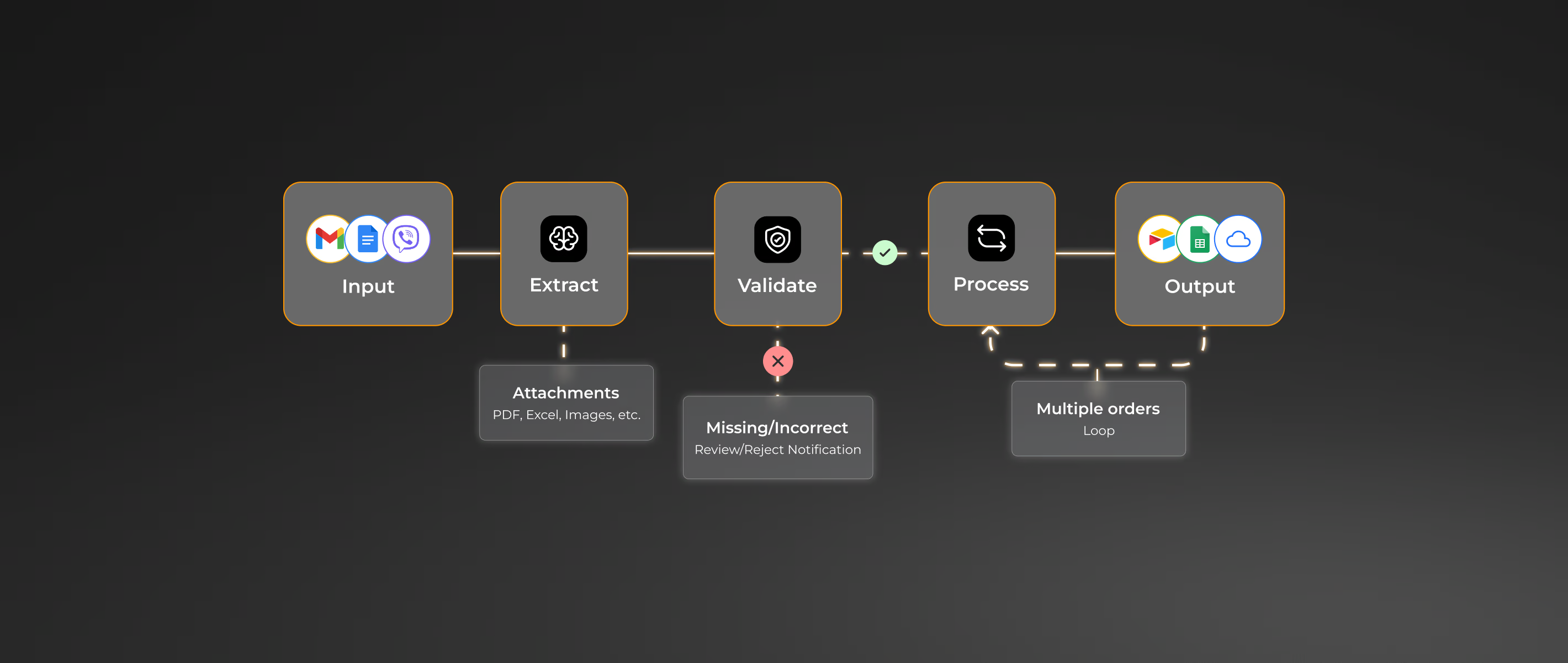
The system operates as a single end-to-end pipeline, turning every incoming request into a fully traceable record.

The solution combines email classification, OCR processing, AI-based data extraction, and automated routing within one unified workflow.
All AI components are deployed in a self-hosted infrastructure within the client’s secure environment, ensuring full data autonomy.
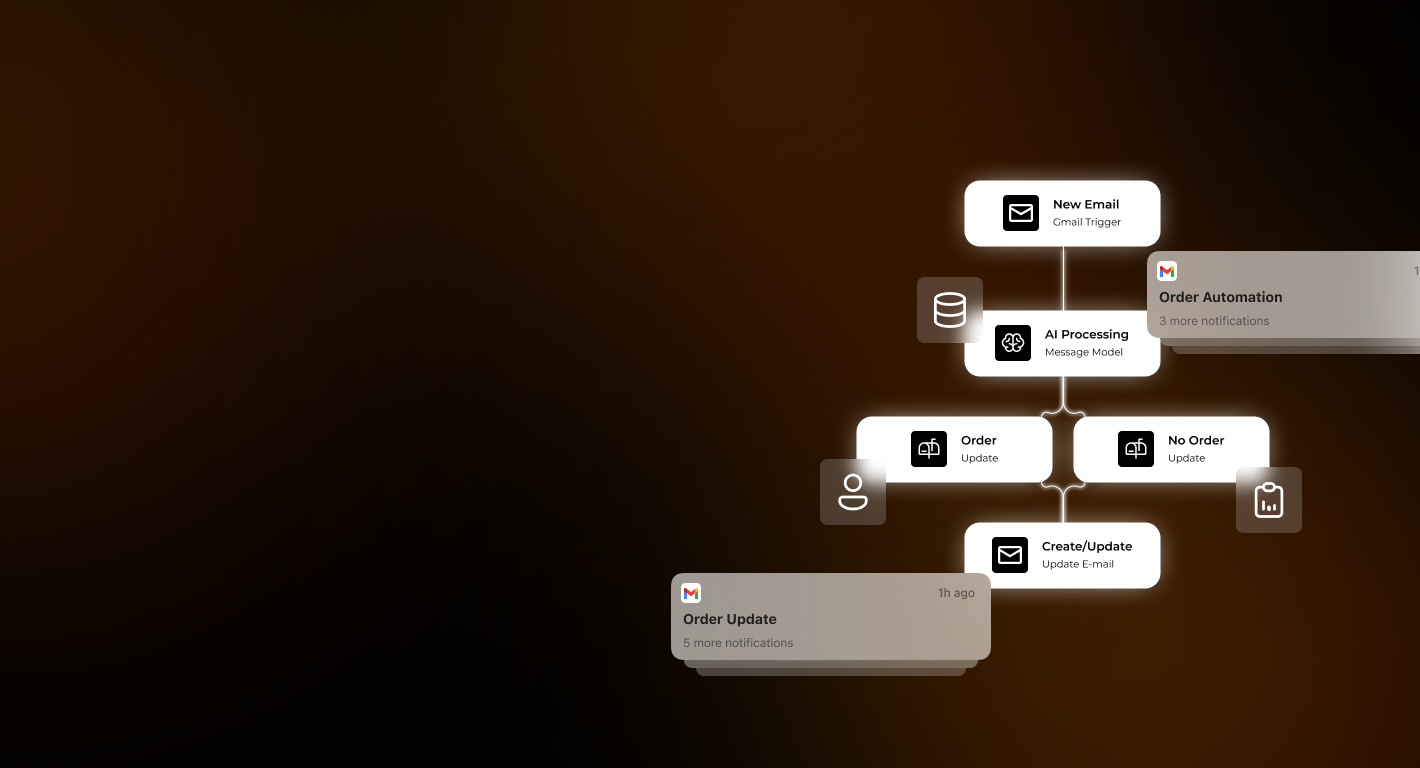
The system connects directly to the client’s mailbox and identifies order-related requests. Incoming emails are automatically classified by type, priority, and processing route, creating a controlled intake point for all dealer orders.
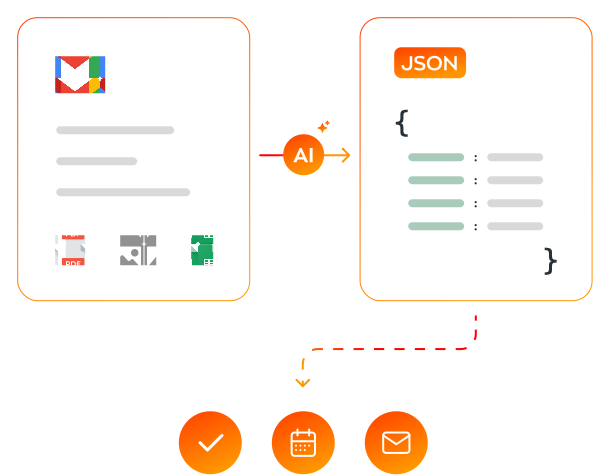
Attachments such as PDFs, images, scans, and spreadsheets are processed using OCR and parsing mechanisms. This converts unstructured materials into machine-readable data for further AI processing.
The AI engine extracts structured order parameters, including product type, quantity, dimensions, materials, colors, hardware, delivery details, and production notes. The output is normalized into a structured format compatible with ERP, CRM, Airtable, and production systems.
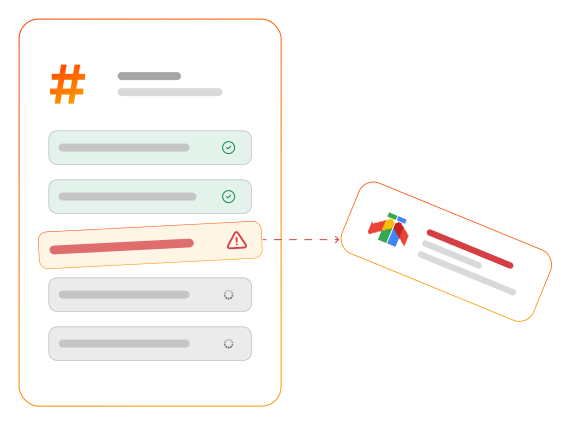
Before synchronization, the system checks data completeness and consistency. Orders with missing or conflicting information are automatically flagged, standard cases are processed automatically, and exceptions are routed for manual review.
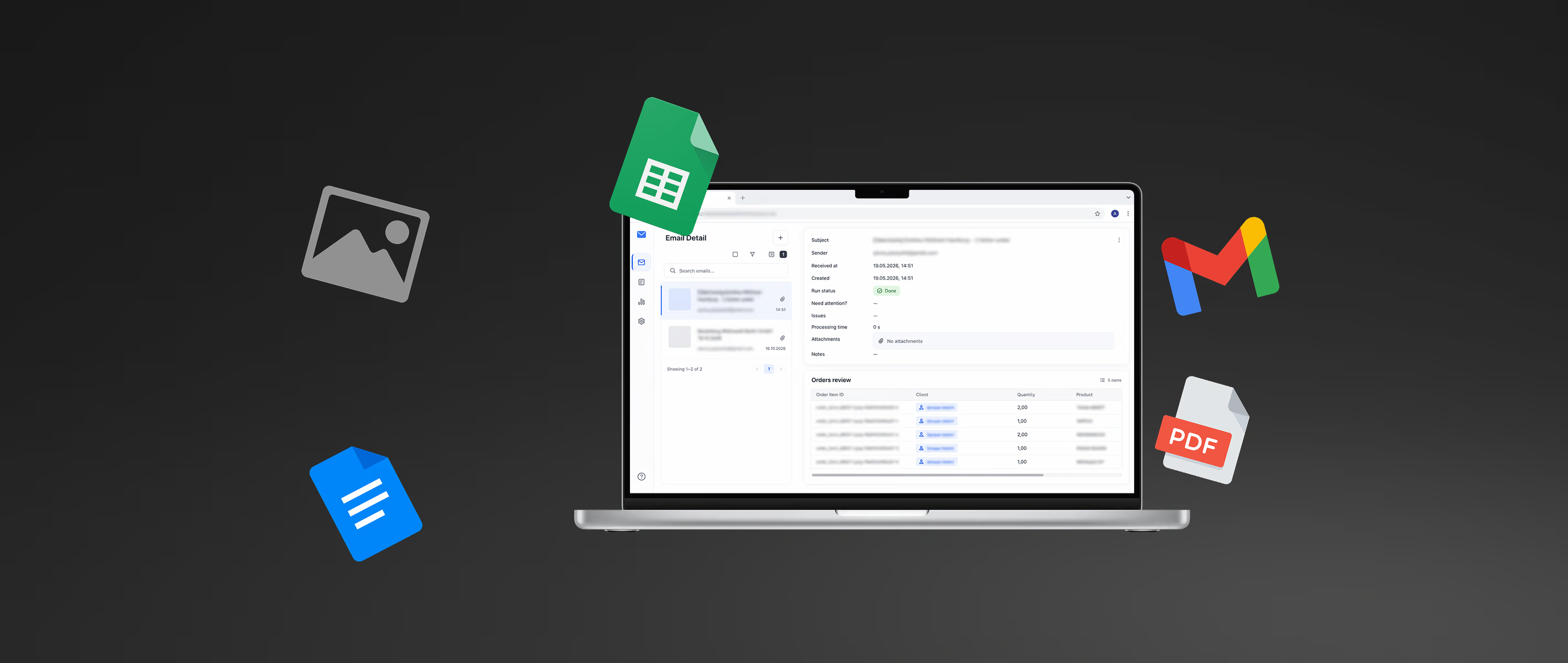
The system processes emails and attachments within a single workflow. AI extracts and structures order data, including support for multiple orders within one email, and standardizes it into a unified format. After validation, each order is saved as a system record and automatically transferred to ERP and other operational systems involved in execution. Additionally, a simple order status page is generated, allowing dealers to track order progress in real time without contacting the operations team.
AI became more than just a support tool. It became part of daily operations. Within a month, the company saw tangible results:
By automating key stages such as classification, data extraction, and preparation, standard order processing became significantly faster and more predictable from email intake to ERP synchronization.
Routine tasks related to extracting, structuring, and routing orders were automated. Operators can now focus on validation and exception handling instead of manual data entry.
AI-powered extraction and structured data processing, combined with validation logic, help reduce errors in critical order parameters such as dimensions, materials, configurations, and delivery details before data reaches the ERP.
Every order is tracked throughout its full lifecycle — from the incoming email to ERP synchronization — including each processing stage and current system status.
The company can handle growing order volumes and seasonal demand peaks without proportionally expanding the operations team, thanks to automation of the key order processing stages.
We take great pride in the successes of our clients, treating each one as an integral part of our extended family. Their inspiring stories prove the real impact and tangible results of our work.
Alexey
Co-Founder & CEO
Ivan
Co-Founder & CTO